
UV sphere with texture seam and pole fans
In your harnessMesh algorithmMIT
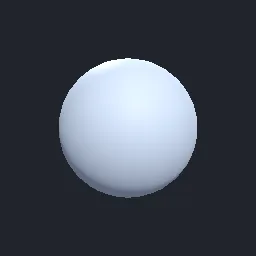
Build a latitude and longitude sphere with unit normals, a texture seam and one pole vertex per segment. Use it for globes, planets and any sphere that takes an equirectangular texture.
What it takes and gives
- Entry points
- uv_sphere, main
- Parameters
- radius, segments, rings
- Complexity
- O(segments * rings)
- Axes
- +Y up, metres
Limits. The seam and the pole vertices are duplicated for texture coordinates, so the mesh is closed only after welding coincident vertices. Pole triangles are thin and the faces are not equal in area; use an icosphere or a cube sphere for even tessellation. The polygon volume and area are below the true sphere's and approach them as segments and rings grow.
Details
- Kind
- Mesh algorithm
- Engine
- Python 3.10 or later
- Files
- 10 files, 203.2 KB
- Licence
- MIT
- Declared effects
- reads files, runs commands, writes files
- Checked with
- Godot 4.7.2, gl_compatibility, OpenGL 3 driver, Mesa llvmpipe under Xvfb
- Checks
- generator runs system python, generator runs verifier python, gltf strict structure, interpreters agree, example matches generator, godot headless gltf load, godot compatibility render
- Techniques
- Spherical coordinates (polar angle, longitude), Equirectangular texture mapping
- Tags
- primitive, sphere, uv sphere, equirectangular, texture coordinates, gltf
- Identity
library.supply.creative_originals.739fe31dc0df3056933cb59b.de13b942ea2c6cba- Version
de13b942ea2c6cba315c5d460dee2a4ff23a9c6754fee975d3dfca0e5e57841d
The version is the SHA-256 of the item your harness downloads; every file in it names its own checksum.
Something wrong with this item, its rights or its safety? Report it on the support page, or from your harness after a download.